
The Princess Motif
Vainqueur the DragonThis flow follows the novel's comic treatment of princesses as trophies, endangered creatures, political hostages, and symbols of cultural continuity.
increasing Bearing strength in each event
 decreasing
Bearing strength in each eventdecreasingPrincess Radar
Princess Radar
A Dragon Tradition
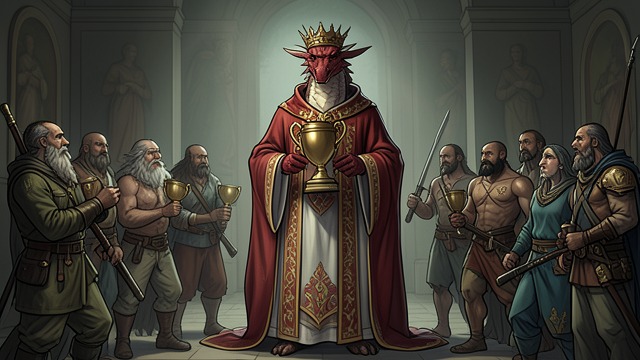
Vainqueur treats princess hunting as a respectable Dragon sport inherited from ancient legends. He distinguishes capture from kidnapping and possession from cruelty through entirely self-serving definitions.
Desire as Status
Princesses matter because they enhance the prestige of the hoard. They are living proof that a dragon has defeated knights, bypassed kingdoms, and preserved a rare species.
The joke exposes the logic of trophy culture.
The Three Captives
The Three Captives
Political Hostages
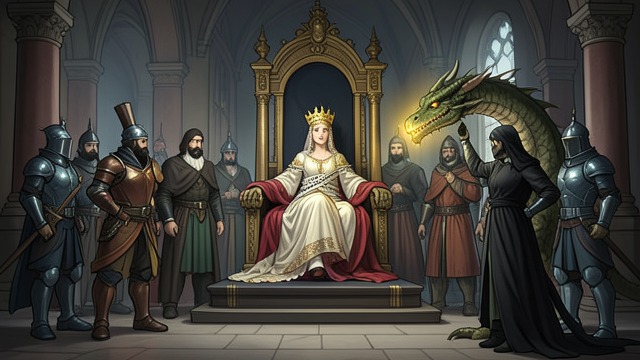
Princess Merveille and two Elven princesses are displayed for sacrifice in Mauria. Their captivity demonstrates how Maure turns noble bodies into instruments of power.
Rescue as Possession
Vainqueur interrupts the ritual to claim the princesses for himself. His action saves them from sacrifice but still treats them as additions to his hoard.
The novel refuses to make rescue morally simple.
Crystal Prison
Crystal Prison
Treasures Frozen
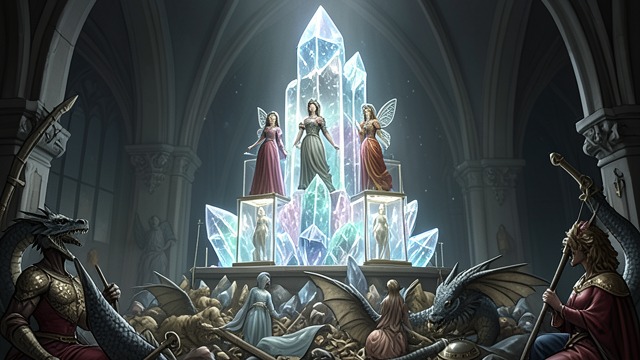
Fairy Crystals trap the princesses, turning living captives into decorations atop Vainqueur's hoard. Their inability to speak or move satisfies the dragon's collecting instinct while disturbing Victor Dalton.
Preservation Without Life
The crystals literalize the contradiction in Vainqueur's treatment of princesses. He claims to preserve them for the wild, yet his collection removes them from all meaningful agency.
The trophy becomes a moral mirror.
Princessness Theory
Princessness Theory
A Biological Mystery
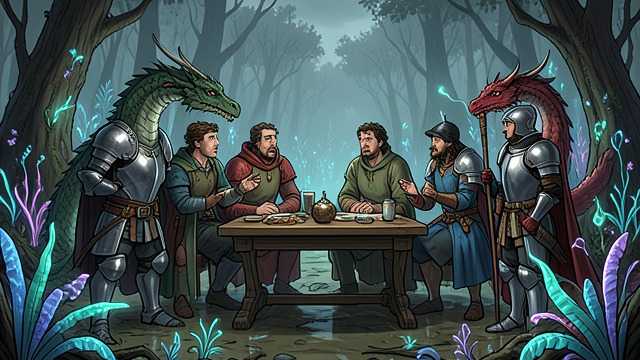
Blightswamp proposes that noble ladies evolve into princesses through unknown conditions. Dragons debate whether knights, wilderness, or captivity create the transformation.
Rarity as Ecology
Their speculation turns princesses into an endangered species shaped by Dragon demand. Vainqueur's hunting tradition therefore threatens the very prestige it seeks to display.
The book makes cultural appetite look like an ecological crisis.
The Released Princesses
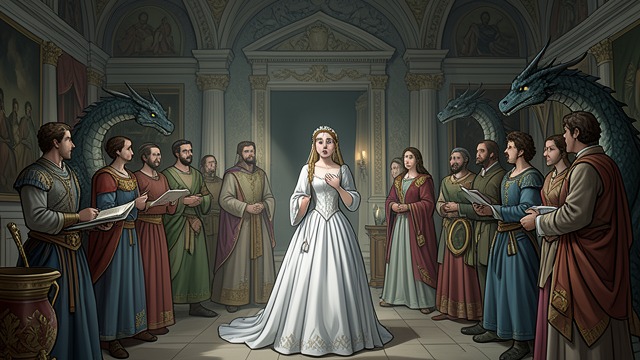
The Released Princesses
A Cultural Collision
Roland Gardemagne and his court recover Princess Merveille after the celebration. The princesses react with terror to the gathering of Dragons, while Vainqueur believes he has offered a perfectly respectable social setting.
Collection and Release
Vainqueur releases them because Dragon tradition requires returning captives to the wild. His action is less compassionate than cyclical: princesses must survive to become future trophies.
The motif ends with preservation still entangled with possession.
during Vainqueur's first reflections on royalty
during the first Demon Corrida
after the first Demon Corrida
during the family discussions before Bragging Day
during Vainqueur’s Bragging Day
